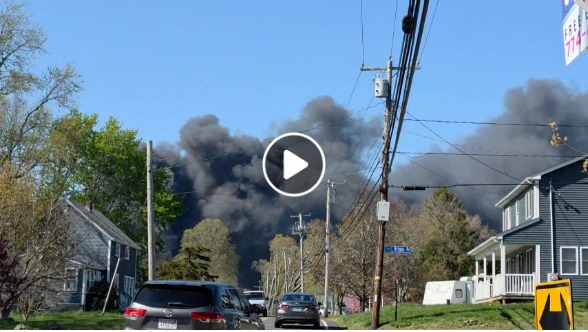
Firefighters responded to a reported blaze at a Seventh-day Adventist church today, launching a large-scale emergency operation to contain the fire, protect nearby buildings, and ensure the safety of everyone in the surrounding area. The response involved firefighters, law enforcement officers, emergency medical personnel, and utility crews after heavy smoke and flames were seen coming from the church.
According to preliminary reports, emergency dispatchers received several calls about a structure fire involving the place of worship. Fire engines, ladder trucks, rescue units, and command personnel were immediately dispatched after witnesses reported visible flames and thick smoke rising from the building. Upon arrival, firefighters encountered an active fire that demanded a swift and coordinated response.
Crews quickly established a reliable water supply and deployed multiple hose lines to attack the fire from different sides of the structure. Ladder trucks were positioned to direct large streams of water onto the roof and upper portions of the building while firefighters on the ground worked to contain the flames. Their primary objective was to stop the fire from spreading further and to safeguard neighboring homes, businesses, and other nearby structures.
Police officers secured the area by closing surrounding roads and restricting access, allowing emergency crews to work safely and efficiently. Drivers and pedestrians were urged to avoid the area while firefighting operations remained underway, as emergency vehicles, equipment, and hose lines occupied nearby streets.
Witnesses described seeing dense smoke billowing into the sky, drawing the attention of residents and passing motorists. Many observed the response from a safe distance as firefighters battled the blaze. Members of the congregation and local community also gathered nearby, expressing concern over the church’s spiritual, cultural, and historical importance.
Church buildings can present unique firefighting challenges because they often feature expansive sanctuaries, high ceilings, wooden roof structures, and large open interior spaces. These characteristics can allow flames to spread rapidly while increasing the risk of structural instability. Throughout the incident, fire commanders closely monitored conditions to protect the safety of crews operating at the scene.
Firefighters also carried out ventilation operations where conditions permitted, allowing heat and smoke to escape from the structure. Proper ventilation improves visibility for crews working inside and helps reduce hazardous fire conditions. Thermal imaging cameras were used to locate hidden hotspots behind walls, above ceilings, and within roof spaces so crews could fully extinguish lingering heat and reduce the risk of rekindling.
Emergency medical teams remained on standby throughout the response in case firefighters or civilians required treatment. As of the latest available information, authorities have not confirmed any injuries or fatalities. Officials said additional information will be released if circumstances change.
Once the main body of the fire was extinguished, firefighters began overhaul operations. During this phase, crews searched for smoldering materials, removed damaged debris where necessary, and continued applying water to remaining hotspots to ensure the fire was completely out before leaving the scene.
The full extent of the damage has not yet been determined. After the building is declared safe to enter, structural engineers and building inspectors are expected to conduct detailed evaluations of the sanctuary, classrooms, fellowship halls, administrative offices, and other areas to determine whether repairs or more extensive restoration will be required.
Fire investigators are expected to conduct a thorough examination to determine where and how the blaze started. Their work will include documenting the scene, inspecting electrical systems and other potential ignition sources, reviewing available surveillance footage, and interviewing witnesses who may have observed the fire during its early stages.
At this time, the cause of the fire has not been identified. Authorities emphasized that the investigation remains active and that it would be premature to speculate about what sparked the blaze. Determining the origin and cause of a structure fire often requires detailed forensic analysis and careful examination of physical evidence.
Beyond the structural damage, a fire at a house of worship can have a significant emotional impact on both the congregation and the wider community. Seventh-day Adventist churches frequently serve as centers for worship, education, youth activities, charitable outreach, community gatherings, and disaster relief efforts. Damage to such a facility can temporarily disrupt many of these important services.
Following the incident, members of the community expressed appreciation for the efforts of firefighters and other first responders who worked under challenging conditions to protect the church and nearby properties. Messages of support, encouragement, and prayers have also been shared across social media as people rally around the affected congregation.
Fire officials continue to encourage property owners to maintain working smoke detection systems, routinely inspect electrical equipment, keep emergency exits clear, and ensure fire suppression systems are properly maintained. These precautions can help reduce the severity of unexpected fires and improve occupant safety.
The investigation into the Seventh-day Adventist church fire remains ongoing. Authorities are expected to release additional information regarding the cause of the blaze, the extent of the damage, and any impact on church services or community programs as verified details become available. Until then, officials urge the public to avoid the affected area and rely on updates from local fire and emergency management agencies for accurate information.