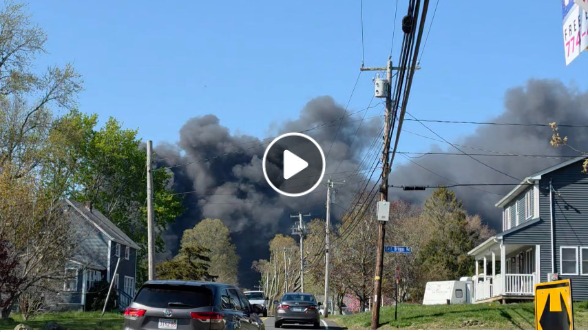
Napa County, California — Firefighters mounted a coordinated emergency response Monday after a vegetation fire broke out in Napa County, prompting the rapid deployment of ground crews, heavy equipment, and aerial resources as incident commanders worked to contain the blaze before dry conditions, warm temperatures, and shifting winds could allow it to threaten nearby homes, businesses, vineyards, and critical infrastructure across the region.
Emergency dispatchers received multiple calls reporting smoke and flames in the Napa area, triggering a response that brought together local fire departments, state firefighting resources, law enforcement agencies, and emergency management officials. Fire engines, hand crews, bulldozers, water tenders, and air support assets were dispatched to the scene as arriving firefighters began assessing the fire’s size, rate of spread, and potential trajectory toward surrounding communities.
The Response on the Ground
Upon arrival, crews encountered burning vegetation spreading through dry grass and brush. Firefighters immediately launched an aggressive initial attack, deploying hose lines around the fire’s perimeter while additional resources worked to establish and reinforce containment lines. Incident commanders coordinated ground and aerial operations simultaneously, working to slow the fire’s forward progress and keep it from reaching nearby structures or agricultural properties.
Aircraft including helicopters and air tankers were positioned to drop water and fire retardant on rapidly advancing sections of the blaze and in terrain difficult for ground crews to access — aerial resources that prove particularly valuable during vegetation fires by slowing forward momentum and cooling hotspots before they can develop into larger threats.
Law enforcement officers responded alongside fire crews to manage traffic, facilitate any necessary evacuation preparations, and ensure emergency vehicles could safely access and exit the incident area throughout the operation. Emergency medical personnel remained on standby throughout the response. At the time of publication, authorities had not confirmed any injuries to firefighters or civilians.
Conditions and Challenges
Firefighters contended with several significant challenges during the response, including dry vegetation, uneven terrain, and the unpredictable weather conditions that make Northern California vegetation fires particularly difficult to manage. Warm temperatures, low humidity, and gusty winds — characteristic of fire weather across Napa County during the warmer months — create conditions under which a vegetation fire can spread with alarming speed if not contained promptly.
Incident commanders maintained continuous monitoring of wind direction and fire behavior throughout the operation, with particular attention to the risk of spotting — the process by which burning embers carried ahead of the main fire on the wind can ignite new areas unexpectedly, opening additional flanks and requiring rapid redeployment of resources.
Witnesses across portions of the county described thick columns of smoke rising above the landscape as crews worked the fire. Motorists traveling through the affected area were advised to exercise caution, as smoke drifting across roadways can significantly reduce visibility and create dangerous driving conditions.
Structure Protection
In addition to suppressing the main fire, crews focused on structure protection across vulnerable areas of the fire’s projected path. Engines were strategically positioned near homes, barns, wineries, and other buildings to defend them should flames approach, and crews worked to remove combustible vegetation and establish defensible space around properties at risk. Napa County’s combination of residential communities, agricultural operations, and wine industry infrastructure makes structure protection a particularly high priority during any vegetation fire incident in the region.
Evacuation and Public Safety
Depending on the fire’s location and projected path, officials may issue evacuation warnings or mandatory evacuation orders for neighborhoods at risk. Residents in or near the affected area are strongly encouraged to monitor official emergency alerts, follow all instructions from public safety agencies without delay, and avoid the affected area unless travel is absolutely necessary.
Smoke conditions across portions of the county may affect air quality throughout the response period. Individuals with respiratory conditions, older adults, young children, and others sensitive to smoke are encouraged to limit outdoor activity, keep windows and doors closed, and operate air-conditioning systems on recirculation mode to minimize indoor smoke exposure.
Damage Assessment and Investigation
The full extent of any damage has not yet been determined. Fire officials will conduct comprehensive damage assessments once the fire is brought under control to evaluate whether homes, businesses, vineyards, fencing, or other infrastructure were affected, and to guide recovery assistance for impacted property owners.
The cause of the fire remains under active investigation. Once conditions are safe, fire investigators will examine the point of origin and evaluate possible ignition sources — a process that may include interviewing witnesses, inspecting equipment, reviewing weather data, and documenting physical evidence at the scene. Authorities have emphasized that it is too early to speculate about how the fire started, and that determining origin and cause is a detailed process that requires thorough analysis before any conclusions can be reached.
Wildfire Preparedness in Napa County
Vegetation fires are a recurring and serious concern throughout Napa County during the warmer months, when seasonal drying of grasses and brush — combined with the region’s rolling hills and open landscape — creates conditions that can support rapid fire growth. Fire agencies across the county urge all residents to maintain defensible space around their properties, prepare and practice household evacuation plans, assemble emergency supply kits, and sign up for local emergency notification systems to receive timely alerts about evacuation orders, road closures, and changing fire conditions.
Preparation made in advance of an emergency can make a critical difference when conditions change rapidly — and in Napa County, they can change very rapidly indeed.
Ongoing Operations
The Napa County vegetation fire remains an active incident. Firefighting operations are expected to continue until crews are fully confident the blaze has been contained and all hotspots have been addressed. Officials will provide updated information regarding the fire’s acreage, containment percentage, evacuation status, road closures, and investigation findings as verified details become available.
Community members have expressed widespread appreciation for the firefighters, law enforcement officers, emergency medical personnel, and public works employees responding to the incident — a coordinated effort focused on a single priority: protecting lives, safeguarding property, and bringing the fire under control as quickly and as safely as possible.
Residents are encouraged to follow official updates from CAL FIRE, the Napa County Office of Emergency Services, and local fire agencies throughout the duration of this incident. Do not rely on social media for evacuation information — follow official channels only.
Disclaimer: The information contained in this article is provided for general informational purposes only and reflects details available at the time of publication. This is an active and developing incident, and all details — including fire size, containment status, evacuation orders, and cause — are subject to change as firefighting operations progress and official updates are released. Members of the public are strongly encouraged to follow official statements from CAL FIRE, Napa County emergency management officials, and local fire agencies for the most current and verified information.